Top 5 Google Algorithm Updates.
Introduction
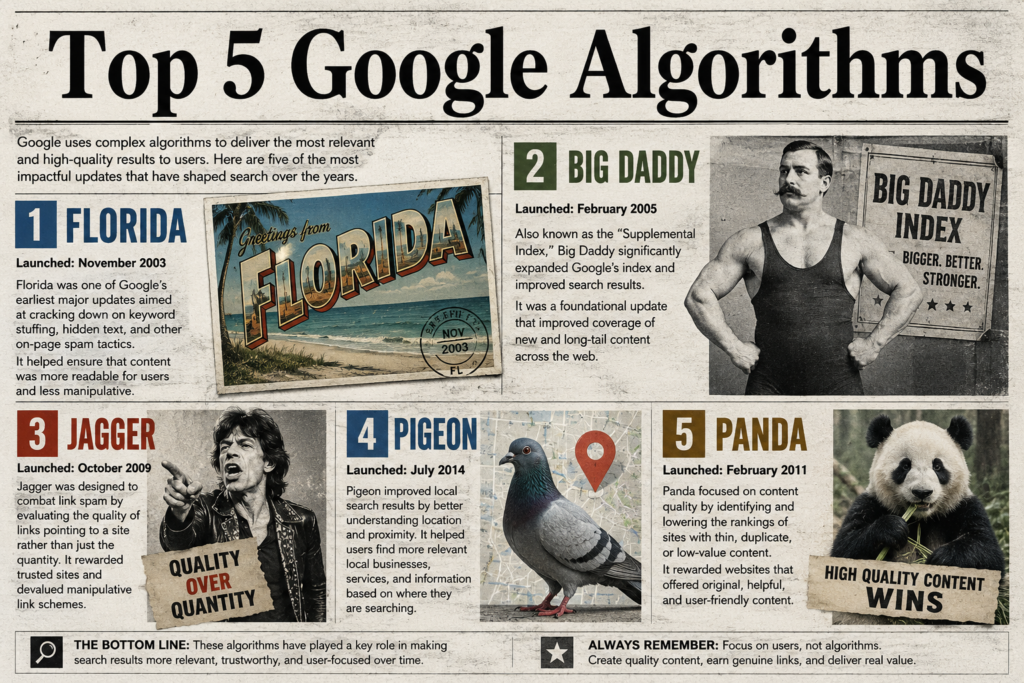
Google algorithms are the mechanisms utilized by Google to determine which websites should show up in search results. Whenever we look for something on Google, these algorithms function behind the scenes to locate the most helpful and best information for users. Throughout the years, Google has launched various algorithm updates such as Florida, Panda, Jagger, Big Daddy, and Pigeon to enhance search quality and minimize spammy sites. These updates primarily aim to provide users with improved content, quicker results, and a more seamless online experience. For digital marketers and businesses, comprehending Google algorithms is crucial as they directly influence website ranking and online visibility. A website that adheres to Google’s guidelines by producing quality content and enhancing user experience stands a greater chance of achieving higher rankings in search results. In straightforward terms, Google algorithms enhance the internet, making it more beneficial, reliable, and accessible for all users who search online daily.
Why Google Updates matters in Digital Marketing?
Google updates are significant in digital marketing as they determine the ranking of websites in Google search results. When Google updates its algorithm, companies and digital marketers need to enhance their website content, SEO, and user experience to remain visible on the internet. These changes allow marketers to concentrate on producing valuable content and establishing trust rather than relying on manipulative tricks to achieve higher rankings.
Major Google Algorithm Updates
- Florida (2003) – One of the first major updates by Google that targeted keyword stuffing and spammy websites. It changed how websites ranked on Google.
- Jagger (2005) – Focused on improving link quality and reducing fake backlinks used to manipulate rankings.
- Big Daddy (2006) – Improved Google’s website crawling and indexing system to make search results more accurate.
- Panda (2011) – Targeted low-quality and copied content. Websites with useful and original content ranked better.
- Penguin (2012) – Reduced rankings for websites using spammy backlinks and black-hat SEO techniques.
- Hummingbird (2013) – Helped Google understand the meaning behind search queries instead of just matching keywords.
- Pigeon (2014) – Improved local search results, helping users find nearby businesses more accurately.
- Mobile-Friendly Update (2015) – Gave higher rankings to websites that worked well on mobile phones.
- RankBrain (2015) – Introduced AI and machine learning to better understand user searches and provide smarter results.
- BERT (2019) – Improved Google’s understanding of natural language and conversational searches.
How can a Digital Marketer can adapt to the new Algorithm changes?
They can adapt to new Google algorithm changes by focusing on quality content, proper SEO practices, and a good user experience. Instead of using shortcuts or spammy tricks, marketers should create helpful and original content that answers users’ needs. Keeping websites mobile-friendly, improving page speed, using the right keywords naturally, and building genuine backlinks also help maintain rankings. Staying updated with Google trends and continuously learning new SEO strategies is important to grow successfully in the digital world.
Common mistakes to avoid after Google updates.
- Avoid using keyword stuffing.
- Don’t copy content from other websites.
- Avoid buying fake backlinks or using spammy SEO techniques.
- Don’t ignore mobile optimization since most users search on phones.
- Avoid slow-loading websites.
- Don’t publish low-quality or useless contents.
- Avoid ignoring user experience like poor design, broken links, or too many ads.
- Don’t stop updating your SEO strategy after an algorithm change.
- Avoid focusing only on rankings instead of helping users with valuable content.
- Don’t panic after updates; analyze the changes and improve the website step by step.
Conclusion
To sum up, Google algorithms significantly enhance the search experience for users by displaying valuable, and reliable content. Updates such as Panda, Pigeon, and Florida assist in eliminating spammy sites and motivate companies to prioritize quality and user experience. For digital marketers, hold these algorithm shifts is essential to preserve website rankings and succeed online. Through ethical SEO strategies and the development of valuable content, companies can adjust to Google updates and enhance their online presence.